

How to Renew Your Mind: The Science and Scripture of Spiritual Transformation
Introduction to Step 2: Pathway to Restoration
In Step 1: Reconnect of the Pathway to Restoration, we identified the “wake-up call” of biblical conviction. It’s the moment you realize you are out of alignment and decide to reconnect with God. But once you’ve crossed the threshold, you face a new obstacle: your brain still has “muscle memory” for your old life.
If Step 1 is about Location (returning to the Father), Step 2 is about Transformation (rewiring the soul).
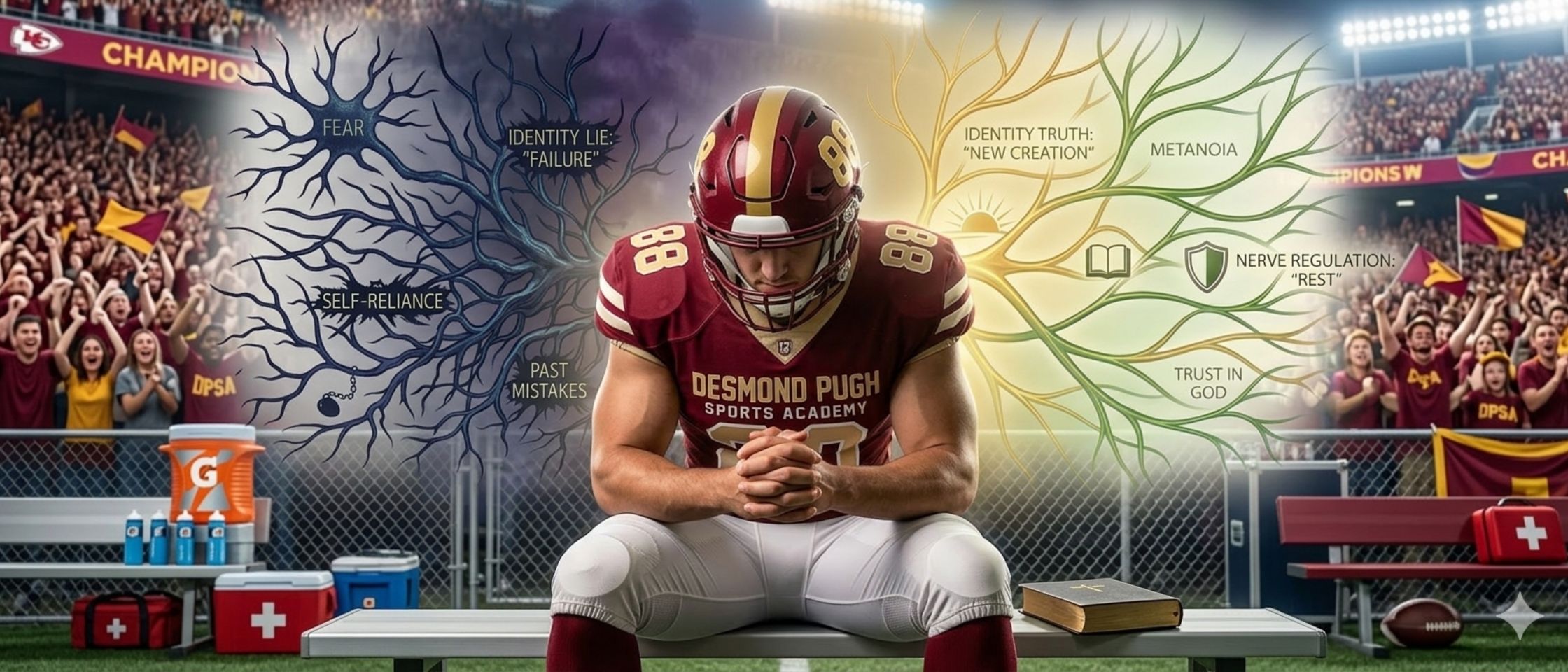
To live out a covenant relationship, you must move beyond temporary inspiration and enter a process of systemic change (transforming your mind and spirit through Scripture, discipleship, and a radical shift in your identity). In the medical world, we call this neuroplasticity; in the Bible, we call it the renewing of the mind. “Do not conform to the pattern of this world, but be transformed by the renewing of your mind.” (Romans 12:2)
What does it mean to renew your mind?
To renew the mind is the process of metanoia—a radical shift in perspective where old neural pathways of fear and self-reliance are replaced by the Truth of Scripture. It is an intentional, Spirit-led “reprogramming” that aligns your psychological identity with your biblical reality.
How to Use Scripture to Regulate Your Thoughts
As an Army medic and pre-med student, I view the mind as the “command center.” If the command center is operating on old, “broken” code, the body will eventually follow suit, no matter how good your intentions are. I’ve seen how the body reacts to a mind in “survival mode.” Its responses are automatic. Before renewing the mind, we live in the “old pattern” of the world, our nervous system is often stuck in a state of high cortisol and chronic stress.
Renewal is the process of “de-programming” the survival instincts of the world—fear, pride, and self-reliance—and “re-programming” your spirit with the character of Christ. This isn’t just positive thinking; it’s a systemic overhaul based on three pillars.
Use Scripture as Your Ultimate Tool for Nervous System Regulation
In the military, we have SOPs (Standard Operating Procedures) to ensure that under pressure, we don’t rely on panic; we rely on the plan.
Scripture is the SOP for the human soul. When you meditate on the Word, you aren’t just reading history; you are performing “cognitive restructuring.” This process recalibrates your moral and mental compass. You are moving your brain from a state of “fight or flight” into a state of “rest and digest,” allowing the Holy Spirit to work on a physiological level.
Renewal happens when God’s Word becomes more “real” to you than your past failures or the world’s opinions.
The Practice: Don’t just read for information; read for formation. Immerse yourself in the Word. Ask, “How does this truth change how I see my current situation?”
Forming Your Spiritual Community is Essential for Brain Change
No elite athlete or Special Operations soldier reaches peak performance in isolation. They have coaches, mentors, and a squad to provide “external resistance.”
Spiritual renewal is also a team sport. Discipleship is the intentional process of walking alongside others who are further down the path. From a neuro-biological perspective, we are “socially wired.” Our brains pick up the habits and thought patterns of the people we spend the most time with. Discipleship provides the “external resistance” needed to grow spiritual muscle. Without a community to hold you to a new standard, you will naturally gravitate back to your old “set point.”
The Practice: Find a “Coach” (mentor) and a “Squad” (small group). Accountability isn’t about being policed; it’s about being protected so your new thought patterns can take root.
Overcome Identity Crisis Through Biblical Identity
The greatest barrier to restoration is a misaligned identity. Most people try to behave their way into a new life, but in the Kingdom of God, identity precedes activity.
If you still see yourself through the lens of your past—as a “failure” or a “sinner barely getting by”—your brain will eventually force your behavior to match that self-image. If you see yourself as a Covenant Child—chosen, redeemed, and empowered—your behavior will naturally begin to align with that reality. The latter is the intent of the Pathway of Restoration.
The Practice: Identify the “identity lies” you believe (e.g., “I’ll always be an addict,” “I’m not worthy of leadership”) and replace them with “Identity Truths” from Scripture (e.g., “I am a new creation,” “I am the righteousness of God in Christ”).
| The Identity Lie | The Biblical Identity Truth |
| “I am defined by my past failures.” | “I am a new creation in Christ.” (2 Cor 5:17) |
| “I am a victim of my circumstances.” | “I am more than a conqueror through Him.” (Rom 8:37) |
| “I am not worthy of God’s love.” | “I am chosen and dearly loved.” (Col 3:12) |
| “I have to earn my seat at the table.” | “I am an heir to the Kingdom by grace.” (Gal 4:7) |
Christian Neuroplasticity: 3 Steps to Start Today
To move from “thinking” about renewal to “experiencing” it, you need a daily protocol.
-
-
Audit Your Inputs: Your brain is constantly “downloading” information. If you spend five hours on news feeds and five minutes in the Word, your mind will remain conformed to the world.
-
Practice Metanoia: This Greek word for repentance literally means “change your mind.” When a toxic thought enters your mind, don’t just ignore it. Catch it, analyze it against the SOP (Scripture), and consciously choose to replace it. This is how you “prune” old neural pathways and grow new ones.
-
Invest in Your Spirit: Just as you wouldn’t expect to grow muscle without protein and training, don’t expect a renewed spirit without prayer and discipleship. Use prayer and deep meditation on a single verse to calm your nervous system. This creates the “biological margin” needed for spiritual growth.
-
Moving Forward: From Mind to Body
Renewing your mind is the internal work that makes external change possible. But the Pathway to Restoration doesn’t stop in the “command center.”
Once your mind is aligned with God’s design, it’s time to look at the vessel that carries that spirit. In Step 3: Rebuild, we will dive into the physical body—how to optimize your health, fitness, and nutrition as a primary act of worship.
Are you ready to stop conforming and start transforming?

